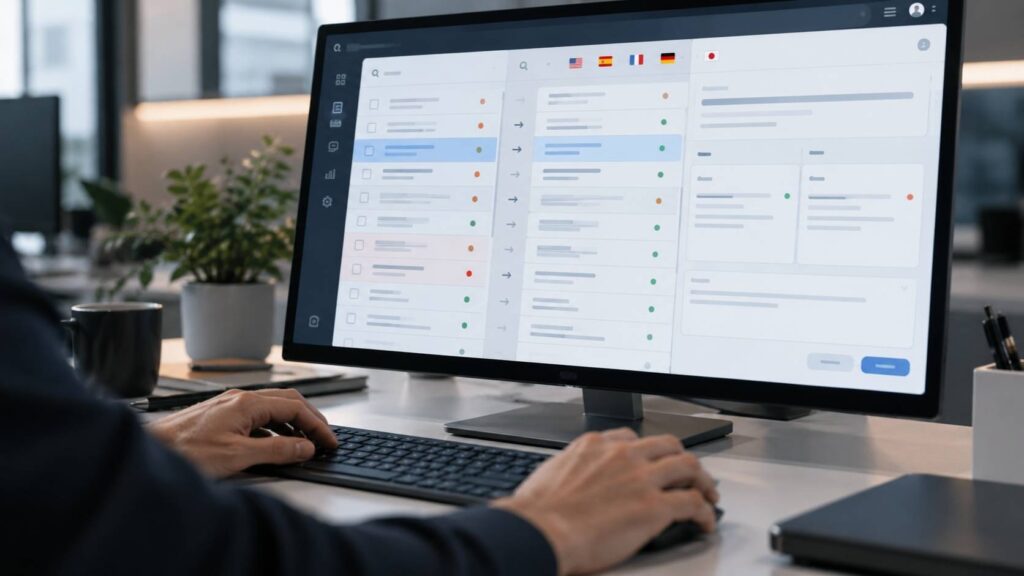
For software teams shipping several times a week, every release brings new strings, updated interface copy, and revised in-product messaging – often before the previous release has finished localization. By the time translated content reaches a market, the product it describes has already changed again. That mismatch is the problem continuous localization is built to solve.
We work with software and product teams whose release cadence has outgrown a project-based approach to translation. We provide localization services designed to support multilingual products and content at scale, while this guide explains what continuous localization is and how to build a workflow that keeps pace with continuous delivery.
Defining continuous localization
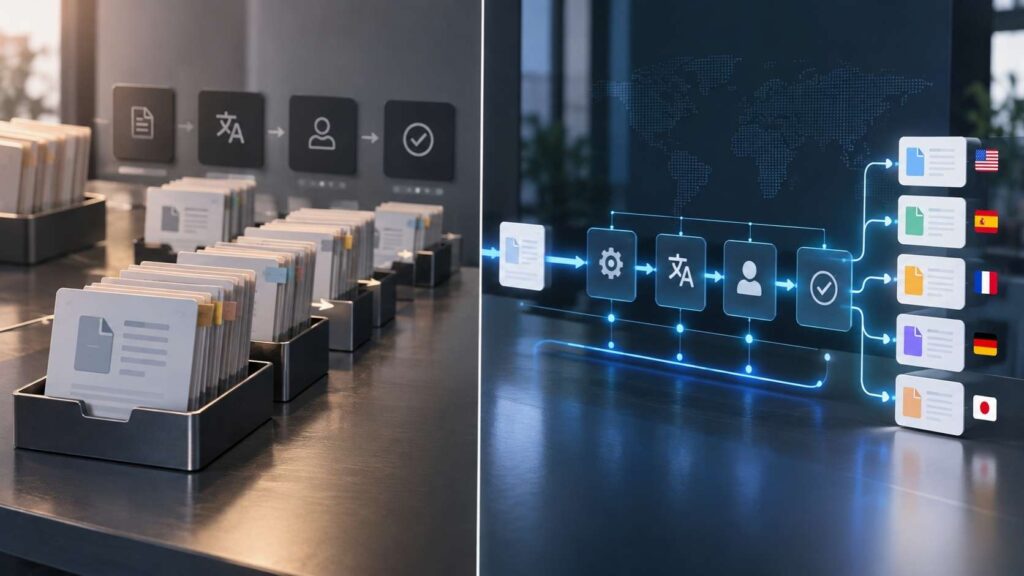
Continuous localization vs traditional localization: the key difference
Traditional localization treats translation as a discrete project: content is finalized, packaged, sent for translation, and returned before publication. Continuous localization removes that packaging step. New and changed content is detected automatically and routed for translation as soon as it is ready, becoming a stage in the development pipeline rather than a project that follows it.
Where it applies: software, SaaS, digital products, and e-commerce
Continuous localization fits any product where content changes frequently and release cycles are short. Software interfaces, SaaS platforms, mobile applications, and e-commerce catalogs all generate a constant stream of small updates that make batch translation impractical, while static content with infrequent updates rarely justifies the infrastructure it requires.
Why continuous localization matters for fast-moving teams
The cost of localization debt
When translation lags behind development, gaps accumulate: untranslated strings appear in production, and the backlog grows with every release until a dedicated project is needed just to catch up. The industry refers to this accumulation as localization debt, and like technical debt, the longer it goes unaddressed, the more expensive the eventual correction becomes.
How translation delays impact product launches in new markets
A product ready to launch in a new market on a specific date needs its localized version ready on that same date, not weeks later. When localization runs as a separate, sequential process, it frequently becomes the constraint that determines the launch date, regardless of how ready the underlying product is.
Aligning development cycles with translation cycles
The goal is not to make translation faster in isolation. It is to make the translation cycle match the length of the development cycle, whether a two-week sprint or a daily deployment, so localized content is never more than one cycle behind the source.
Core components of a continuous localization workflow
Automated content extraction and ingestion
Continuous localization begins with automated detection of new and changed content, pulled directly from source files or content repositories rather than assembled manually into translation packages. Automated extraction removes both the delay and the error risk of identifying and exporting content by hand.
Translation management system integration with development pipelines
A translation management system connected directly to the development pipeline is what makes continuous localization operational rather than aspirational. New strings are detected and routed automatically as they are committed, and completed translations return to the pipeline without manual handling.
Machine translation and post-editing in continuous workflows
The volume and pace of continuous localization make machine translation with human post-editing the practical default for most content categories. We orchestrate multiple AI models within the pipeline, routing each segment to the engine best suited to it, while quality estimation flags which ones need human review.
Translation memory and terminology governance at speed
Speed does not remove the need for consistency; it raises the stakes of getting it wrong. Translation memory and a governed termbase need to be integrated into the automated workflow so that every segment is checked against approved terminology before it reaches the target market.
How to implement continuous localization
Integrating localization into the CI/CD pipeline
The starting point is connecting the TMS to the Continuous Integration/Continuous Delivery (CI/CD) pipeline so that localization becomes a build step rather than a separate request. The pipeline can then be configured to wait for translated content, merge it later, or flag missing translations depending on release requirements.
Defining content triggers and routing rules
Not every commit should trigger a translation request, and not every string needs the same treatment. Routing rules define which content types trigger automatic translation, which route to machine versus human translation, and which require review by a subject matter expert before publication.
Establishing quality gates for automated and human review
Continuous does not mean unreviewed. Quality gates built into the pipeline check terminology, formatting, and completeness automatically while flagging content that requires human linguistic review, with the gate structure reflecting the risk profile of the content category.
Measuring performance and iterating
A continuous localization workflow needs the same kind of monitoring as the pipeline it runs alongside: turnaround time by content type, the proportion requiring human review, and error rates caught after publication, reviewed regularly to adjust the routing rules.
What a continuous localization pipeline looks like in practice
The diagram below shows a typical flow for a software product, from a code change to a released translation.
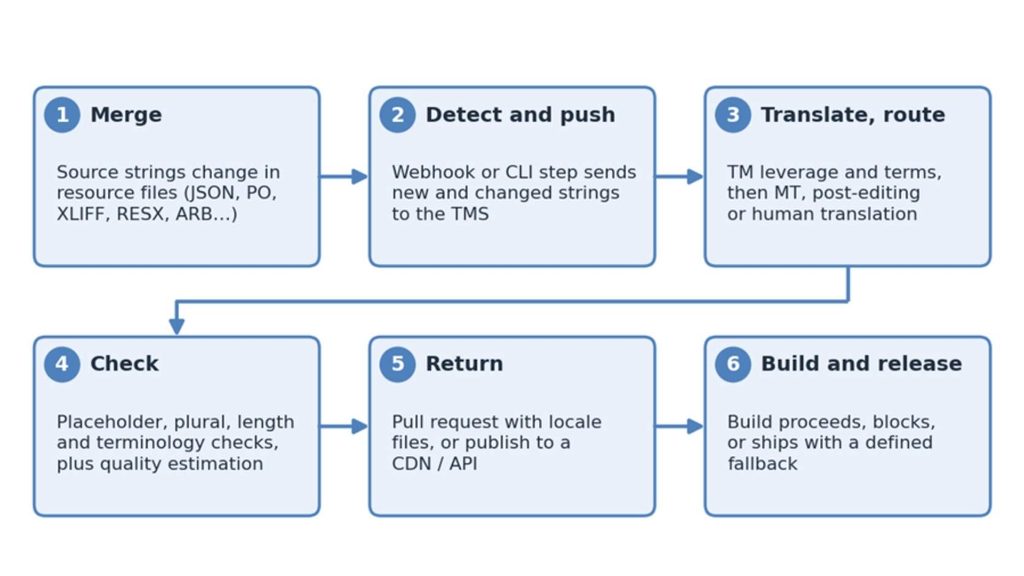
Figure 1. Reference continuous localization pipeline.
In practice, the pipeline runs in six steps:
- A developer merges a change that adds or modifies source strings in the resource files (JSON, PO, XLIFF, ARB, RESX, Android XML, or iOS strings).
- A webhook, repository integration, or CLI step in the CI job detects the changed strings and pushes them to the TMS.
- The TMS leverages translation memory, applies terminology, and routes each segment to machine translation, post-editing, or human translation according to the routing rules.
- Automated checks and quality estimation decide which segments are approved automatically and which are flagged for review.
- Approved translations are returned, typically as a pull request with the updated locale files, or published directly to a delivery layer.
- The build runs the localization checks and either proceeds, blocks, or ships with a defined fallback.
Continuous localization in practice
For SaaS and software companies
SaaS products update their interfaces, release notes, and help documentation on a rolling basis, often across multiple product areas simultaneously. Continuous localization keeps the localized product aligned with each release instead of trailing behind it.
For e-commerce and digital retail
E-commerce catalogs generate high volumes of frequently updated content: product descriptions, promotional copy, inventory changes, and seasonal campaigns, often across dozens of markets at once. A continuous workflow keeps international storefronts current without requiring a translation project for every update.
For enterprise product teams
Large product organizations often run multiple product lines and release schedules under one localization function. Continuous localization gives that function the automation to serve every product team from a shared workflow, rather than a separate ad hoc process for each release calendar.
Common challenges and how to address them
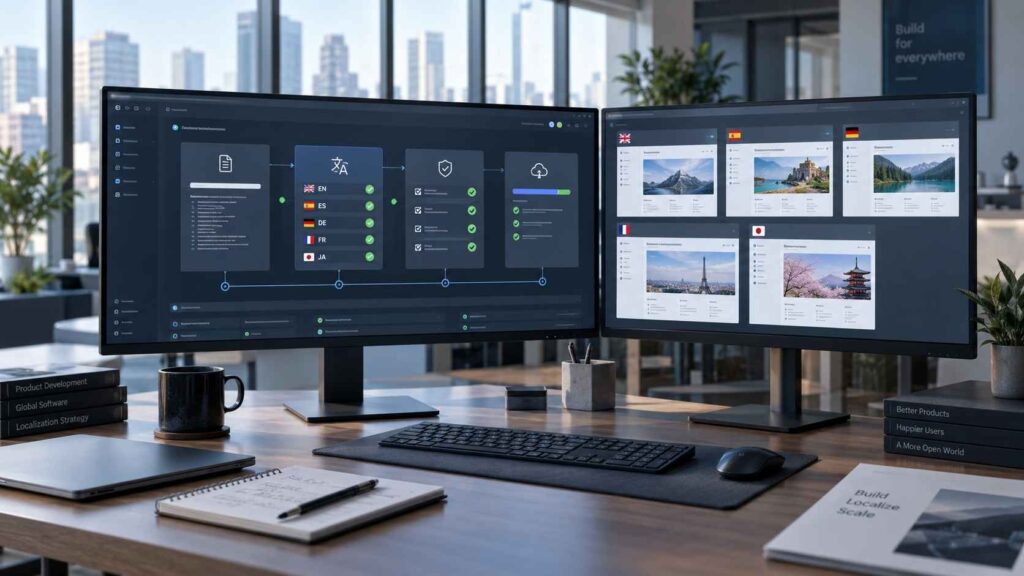
Managing string context for translators
A string extracted automatically from code often arrives without the visual or functional context that would help a translator or an AI-translation engine choose the right rendering. Workflows that pass screenshots and placement notes alongside the string produce measurably better first-pass quality.
Handling frequent small updates without quality loss
High-frequency, low-volume updates are easy to under-govern, since no single change looks significant enough to warrant full review. Applying the same terminology checks to small updates as to large ones is what prevents the gradual quality erosion continuous workflows are otherwise prone to.
Terminology consistency at scale
Frequent releases across multiple content owners increase the risk that the same term gets translated differently by different contributors or engine outputs. Terminology governance needs to be enforced at the point of translation rather than caught in a later review.
What to look for in a continuous localization partner
Not every language partner is built to operate inside a development pipeline. The right partner brings TMS integration experience, machine translation engines that can be customized to the product’s terminology, and a governance model that scales with release frequency rather than breaking under it. We design continuous localization workflows around the client’s existing development infrastructure, working as a Language Intelligence Partner that treats translation as a stage the release process runs through rather than a stop it waits on.
What teams ask about continuous localization
What is the difference between continuous localization and agile localization?
The terms are often used interchangeably. Agile localization describes translation organized in short, iterative cycles aligned with development sprints, while continuous localization automates the trigger for those cycles so translation starts as soon as content changes.
What tools support continuous localization?
A translation management system with API or plugin-based integration to the content repository is the core requirement, paired with machine translation engines and a termbase that both connect to the same pipeline.
How does continuous localization affect translation quality?
Quality depends on how the workflow is governed, not on the speed itself. A continuous workflow with defined quality gates and appropriate human review maintains the same standards as a traditional process, applied at a faster cadence.
Is continuous localization only for software products?
Continuous localization is not limited to software. Any content that updates frequently and needs to reach multiple markets quickly, including e-commerce catalogs, benefits from the same automation and workflow principles.
If your product release cycle has outpaced your localization process, contact us to discuss how a continuous localization workflow could be built around your existing pipeline.
Transparency Notice
Artificial intelligence tools may be used to support the creation of some of the content published on this blog. All content is reviewed, adapted, verified, and approved by the Seprotec team, which assumes editorial responsibility for its publication.



There are no comments
Leave a comment