World Refugee Day: Why Cultural Mediation Services Matter
Every year on June 20, World Refugee Day highlights the experiences of millions of people who have been forced to leave their homes because of conflict, persecution, or violence. Beyond raising awareness, the day also encourages governments, NGOs, healthcare providers and communities to reflect on how support systems can become more inclusive and accessible.
For refugees arriving in a new country, communication is often one of the first and most significant challenges. Understanding healthcare systems, legal procedures, housing services, education pathways, or employment requirements can become extremely difficult when language and cultural barriers exist at the same time.
This is why cultural mediation services have become increasingly important in refugee support programs. Effective communication is not only about translating words. It is also about helping people understand unfamiliar systems, social expectations, and cultural contexts in a way that builds trust, clarity, and inclusion.
What Is World Refugee Day And Why Does It Matter?
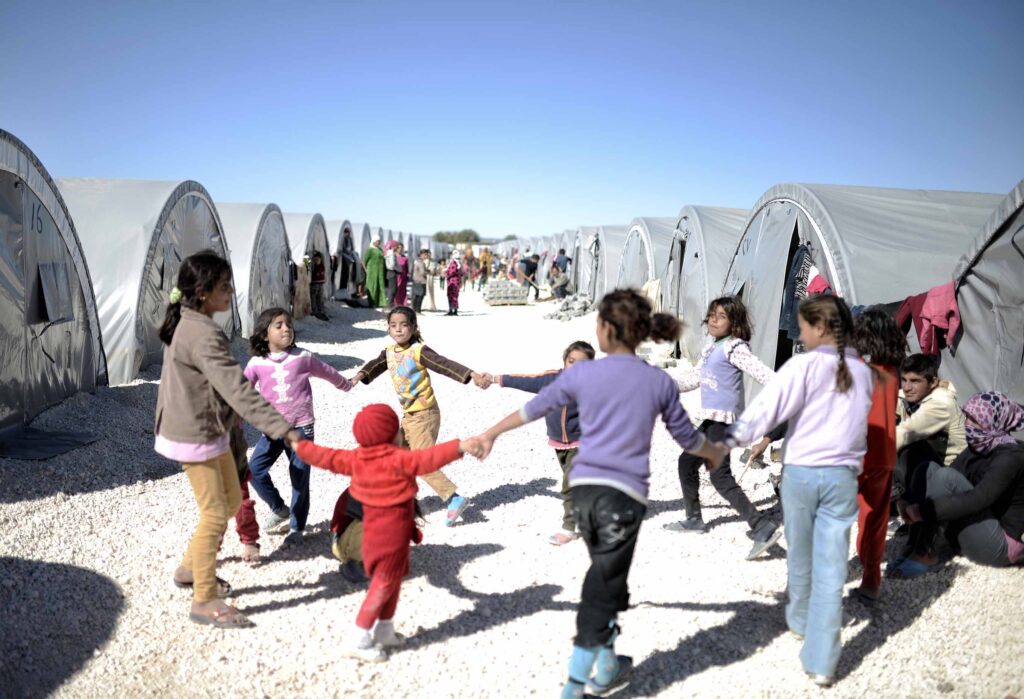
World Refugee Day is an international observance dedicated to honoring refugees and raising awareness about the challenges faced by people forced to flee conflict, persecution, or violence. Beyond awareness, the day also encourages governments, organizations, and communities to improve support systems and create more inclusive societies.
As global displacement continues to grow, access to healthcare, legal protection, education, and public services becomes increasingly important. However, these services are only effective when people can fully understand and navigate them. This is where cultural mediation services and language access solutions play a critical role.
When Is World Refugee Day Observed?
Date, origin and global recognition
World Refugee Day is observed every year on June 20. The United Nations General Assembly officially designated the date in 2001 to recognize refugees worldwide and highlight the importance of international protection and humanitarian support.
The role of the United Nations and UNHCR
The day is closely associated with the United Nations Refugee Agency (UNHCR), which works to protect displaced populations and support long-term solutions such as resettlement, integration, and voluntary return when possible.
Organizations supporting refugees increasingly recognize that effective communication is essential to these efforts. Without proper language access, refugees may struggle to understand legal procedures, healthcare instructions, or social services available to them. According to the UN Refugee Agency (UNHCR), access to protection and essential services remains a critical component of refugee support worldwide.
Why Do People Become Refugees?
War, persecution and violence
People become refugees when they are forced to flee their countries because of armed conflict, persecution, political instability, or violence. Persecution may be linked to factors such as race, religion, nationality, political opinion, or membership of a particular social group a core element in international refugee protection. Many cross international borders seeking safety and legal protection.
Refugees often arrive in unfamiliar environments where they must quickly navigate healthcare systems, asylum procedures, housing services, schools, and employment pathways often in a language they do not speak.
Climate change, disasters and forced displacement
Environmental disasters and climate-related crises are also contributing to increasing displacement worldwide. While not all displaced individuals qualify as refugees under international law, many still require urgent humanitarian assistance and multilingual support services.
In these situations, communication barriers can significantly delay access to aid, healthcare, legal support, and emergency information.
Why Are Cultural Mediation Services Essential For Refugees?
Bridging language and cultural barriers
When people arrive in a new country, communication challenges often extend beyond language alone. Different healthcare systems, legal frameworks, social norms, and administrative procedures can create confusion even when translation is available.
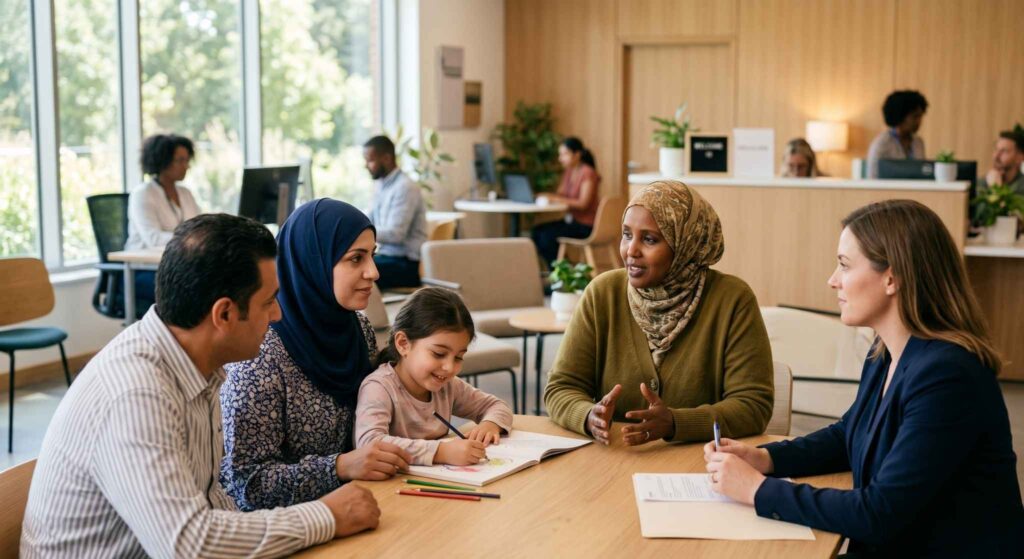
Cultural mediation services help bridge both linguistic and cultural gaps by facilitating understanding between refugees and service providers.
Cultural mediators support communication by:
- clarifying cultural context
- reducing misunderstandings
- helping institutions communicate more effectively
- improving trust between refugees and organizations
- supporting culturally sensitive interactions
This human-centered approach is especially important in high-stakes environments such as healthcare, legal aid, education, and social services.
Interpretation in healthcare, legal and public services
Organizations providing refugee support often rely on interpreting services to ensure accurate communication during high-stakes interactions.
Cultural mediation services remain essential for refugees navigating critical situations such as:
- medical appointments
- asylum interviews
- legal hearings
- police statements
- social services registration
- housing and employment support
Inaccurate communication in these contexts can lead to serious consequences, including medical errors, legal misunderstandings, or exclusion from public services.
Interpreters and cultural mediators help ensure communication remains accurate, confidential, and accessible.

Translation, cultural mediation and safe communication
Professional multilingual translation services help refugees access critical information safely and clearly, playing a key role in refugee support by helping individuals understand:
- official forms and notices
- healthcare documentation
- legal rights and procedures
- educational materials
- onboarding and employment documentation
- emergency information
Combined with cultural mediation services, translation and interpreting create a more inclusive communication framework that supports both accessibility and dignity.
As a trusted language intelligence partner, Seprotec Multilingual Solutions supports organizations with translation, interpreting, and cultural mediation services designed to facilitate clear and inclusive multilingual communication.
Additional Insights On Cultural Mediation Services
What is the difference between a refugee, an asylum seeker, and a migrant?
Here is a simple distinction commonly used by UNHCR and international organizations:
- Refugee: a person forced to flee conflict, violence, or persecution who has crossed an international border and is recognized as needing international protection.
- Asylum seeker: someone who has applied, or intends to apply, for refugee status, but whose claim has not yet been officially approved.
- Migrant: a broader term referring to a person who moves from one country or region to another, usually for reasons such as work, education, family reunification, or improved living conditions. Unlike refugees, migrants are not necessarily fleeing persecution or immediate danger.
What Rights Do Refugees Have Under International Law?
The cornerstone is the 1951 Refugee Convention (and its 1967 Protocol), which sets standards for treatment and protection. A central principle is non-refoulement: refugees should not be returned to a place where they face persecution or serious harm.
How are cultural mediation services different from basic translation?
While translation focuses on converting written content from one language to another, cultural mediation services address the broader communication context. Cultural mediators help organizations navigate differences in social norms, institutional expectations, communication styles, and cultural perceptions that may affect understanding and trust.
Can cultural mediation improve trust between organizations and refugee communities?
Yes. Clear and culturally informed communication helps organizations build stronger relationships with refugee and migrant communities. When individuals feel understood and respected, they are more likely to engage with services, follow procedures, attend appointments, and participate in integration programs.
Trust is particularly important in healthcare, safeguarding, legal assistance, and social support environments.
What Languages Are Commonly Requested In Refugee Support Services In Europe?
Language demand across refugee support services in Europe changes over time depending on geopolitical events, migration routes, and humanitarian crises. However, several languages are consistently requested by healthcare providers, NGOs, public institutions, legal services, and humanitarian organizations.
Some of the most commonly requested languages in refugee support services across Europe include:
- Arabic
- Ukrainian
- Dari
- Pashto
- Farsi
- Kurdish
- Tigrinya
- Somali
- French
- Russian
Recent displacement trends linked to conflicts in Ukraine, Syria, Afghanistan, Sudan, and other regions have significantly increased demand for professional interpreting, translation, and cultural mediation services in these languages.
Because refugee populations are highly diverse and language needs can evolve rapidly, many organizations require scalable multilingual support solutions capable of providing both linguistic accuracy and cultural understanding across multiple communication channels.


There are no comments
Leave a comment